Where maderotherapy comes from
Maderotherapy has roots in South American body work traditions, where carved wooden instruments were used as an alternative to hands-only massage for reaching deeper pressure with more consistent tool shapes. The name comes from 'madera,' the Spanish word for wood.
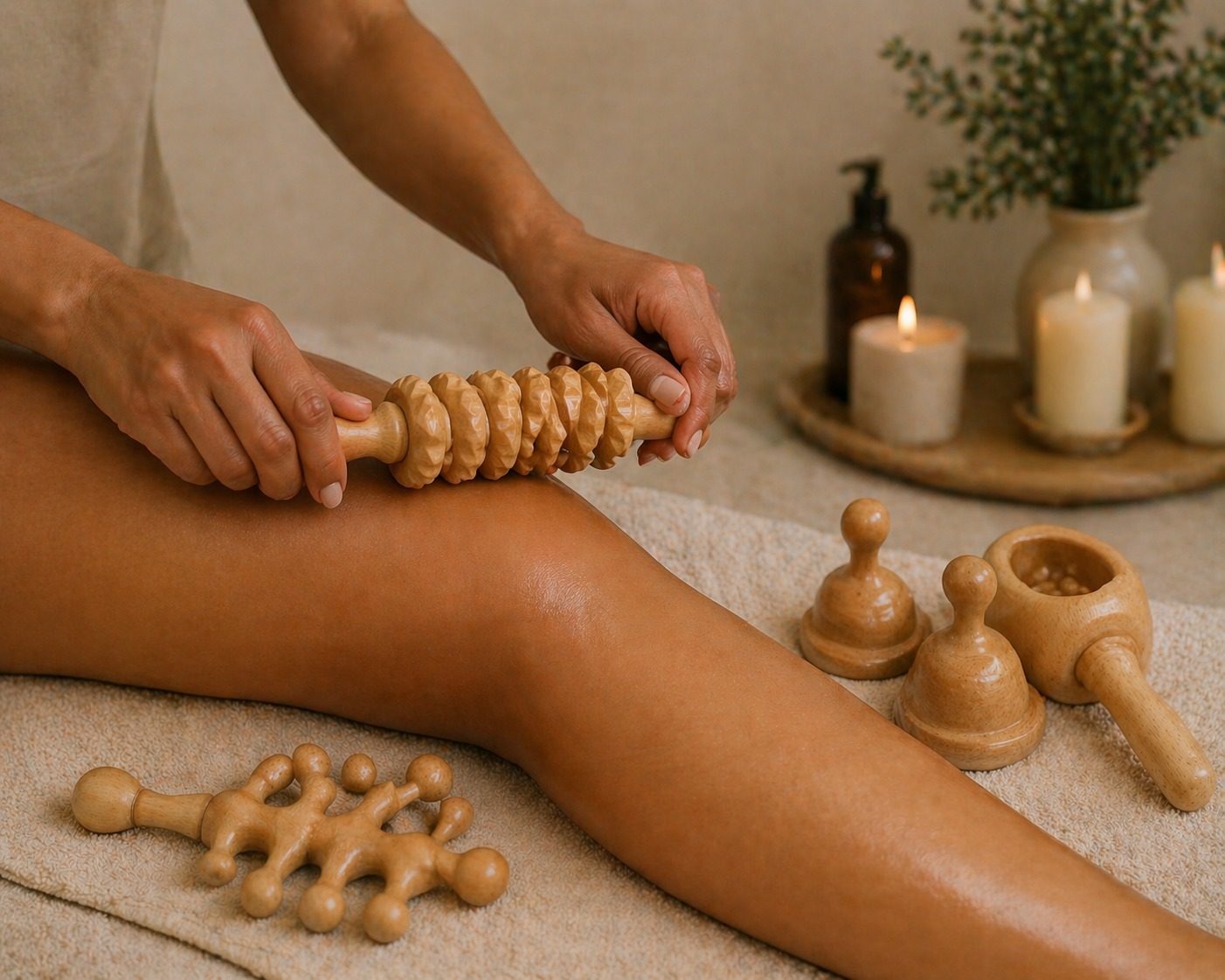
The wooden tools and what they do
- Rollers. Cylindrical pieces used in sweeping motions across larger areas like thighs or the back.
- Cups and mushrooms. Rounded, domed tools used for more targeted, circular pressure.
- Combs and flat boards. Used to vary pressure and rhythm across a treatment area.
What a session actually feels like
A typical session begins with an oil or serum applied to the skin so the wooden tools glide smoothly. The practitioner then moves the tools in a combination of long strokes and firmer, more localized pressure over the treatment area, usually the abdomen, thighs, back or arms. Sessions commonly run 30–60 minutes. Pressure can be adjusted throughout, so it is worth speaking up if an area feels too intense.
Common goals people have for wood therapy
Most people book maderotherapy for smoother-feeling skin texture, a temporary contoured appearance, and general relaxation similar to a deep-tissue massage. It is not a medical treatment and does not remove fat or permanently reshape the body — any provider who frames it that way is overstating what the technique does.
How many sessions make up a course
Because effects are cumulative and temporary, maderotherapy is usually offered as a short series rather than a single visit — for example, weekly sessions over several weeks. A practitioner can walk through realistic spacing based on the treatment area and goals.
Aftercare basics
- Drink water in the hours after a session, as with any deep body work.
- Mild, temporary redness or warmth in the treated area is normal and typically settles within a day.
- Avoid scheduling a session immediately before sun exposure on the treated area.
Who should skip it or check in with a provider first
Maderotherapy involves firm pressure, so it is generally not recommended over broken skin, recent surgical sites, active skin infections, or during pregnancy without guidance. If you have a health condition affecting skin, circulation or sensation, mention it before booking so the session can be adjusted or postponed.
Preparing for your first wood therapy appointment
Arrive with clean, product-free skin over the treatment area so oils and serums applied during the session can be absorbed properly rather than sitting on top of lotion. Loose, easy-to-remove clothing makes the setup faster, particularly for abdomen or thigh work.
It helps to eat a light meal beforehand rather than arriving on an empty stomach, since firm pressure over the abdomen in particular can feel more noticeable without it.
Setting realistic expectations for results
Any change in the way skin looks or feels after a session is temporary and tied to circulation and fluid movement, not fat reduction. People who see the most satisfying results tend to treat maderotherapy as a relaxing, skin-texture-focused ritual rather than a shortcut to a different body shape, and they pair it with consistent hydration between sessions.
Scheduling around Orlando's pool and beach season
Because treated skin can look mildly flushed for a few hours, it's worth avoiding back-to-back scheduling with a pool day or direct sun exposure right after a session. Booking maderotherapy on an evening or indoor day during a Florida trip, rather than immediately before beach time, keeps the experience more comfortable.
Maderotherapy with Perla Esthetics
Perla Esthetics offers maderotherapy-style body sculpting sessions as a private, mobile service throughout the Orlando area, brought to your home, hotel or vacation rental. Because sessions are one-on-one, pressure and pacing can be adjusted to your comfort throughout.
Questions People Ask
- Does maderotherapy hurt?
- Most people describe it as firm pressure similar to a deep-tissue massage rather than pain. Pressure can be adjusted at any point during a session.
- How many sessions of wood therapy do I need to see a difference?
- Because effects build over time, most providers structure it as a short series rather than one visit; a provider can suggest realistic spacing for your goals.
- Is maderotherapy the same as a lymphatic massage?
- They overlap in technique but are not identical — maderotherapy relies on wooden tools for texture and contour work, while lymphatic massage typically uses hands and lighter pressure focused on fluid movement.
- Can I get maderotherapy while on vacation in Orlando?
- Yes, mobile providers can bring the treatment to a hotel or vacation rental, though it is worth booking with enough lead time to allow any temporary redness to settle before events or photos.